ENG
ESP
CAT
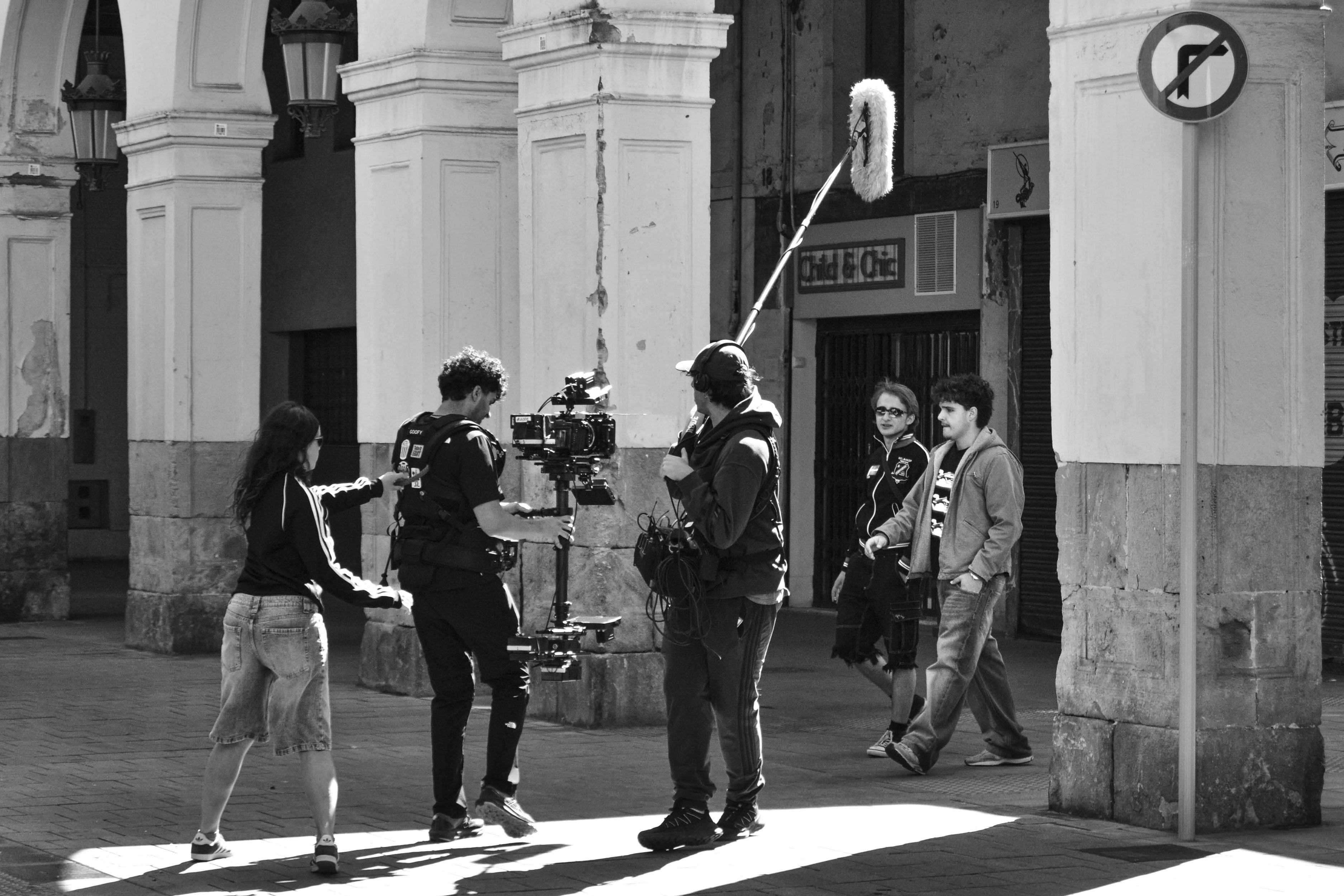
Camera & Lenses: From the very first moment, upon reading the script and talking with Norma about Marcos' story, I understood how he moved through space, his relationship with his neighborhood and surroundings, and it became clear to me that the story called for a steadycam.
Marcos is a character who isn't going anywhere, but he can't stay still either. I needed a camera capable of absorbing that ambiguity—fluid yet imperfect, since he has nothing planned and improvises as he goes. A dolly track shoot would have been too cold, too calculated. A gimbal, too mechanical and predictable. The steadycam, on the other hand, possesses an organic quality.
For the second day, we had to shoot with a gimbal due to budget and steadycam availability, but we felt confident knowing we had prioritized the project's most critical shots with the proper tool. Finally, on the third day, when shooting the interior scenes of the house, I opted for a fixed camera that allowed for tilts and pans, but limited itself to observing Marcos and his mother rather than accompanying them.
Regarding the lenses, I considered various options, always seeking sharpness mixed with texture and image imperfections. Initially, since I planned to shoot with the DJI Ronin 4D—which comes modified with a Sony E-mount at the rental house—the lens catalog was significantly limited unless we used an adapter... In the end, when we chose the Blackmagic 6k Pro, we were able to return to a wider and more varied selection of lenses that were closer to the visual style I was looking for. At Escac, thanks to the school's cinematography professors and coordinators, I gained access to the 24mm, 35mm, and 50mm Sigma High Speed T/1.5 kit. These lenses were exactly what I needed: fast, which made shooting at night in low light much easier; sharp and gritty, allowing us to convey the story just as we had envisioned it; and with subtle imperfections toward the edges of the frame, especially at T/1.5 and T/2.
Aspect Ratio: The decision to shoot in 3:2 was born directly from the space itself. The streets of Sant Andreu de Palomar, the frames of the market square, the rooms inside the house... everything naturally leaned toward a squarer proportion, and 3:2 was the format that best dialogued with that geometry. Beyond the coherence with the locations, however, the format served a clear narrative purpose: to compress Marcos within the frame, leaving him with no visual escape. I wanted to portray a character who wants to go many places, but in reality never leaves his neighborhood, trapped within himself.
Lighting: The approach regarding lighting was naturalism. Since a large portion of the sequences were shot on location outdoors, and furthermore, mixed night and day exteriors, the lighting required meticulous planning and consideration.
Norma and I were certain that we didn't want any artificial light sources that would pull you out of the story, nor did we care about having a "correct" exposure on the characters' faces.
The primary tools that Éric, the Gaffer, used to shape the light were 2x2m diffusion frames and silver reflectors to model and redirect the sun, avoiding the need for a generator and artificial fixtures.
The night scene of the robbery was the only necessary exception. The streetlamps provided harsh, poorly directed light that was unusable as it was. The solution was to eliminate it completely by blacking out the streetlamps and replacing them with a single overhead LED fixture, placed in the position that best served the characters dramatically.
Cámara y ópticas: Desde el primer momento, al leer el guion y hablar con Norma sobre la historia de Marcos, entendí cómo se movía por el espacio, qué relación tiene con su barrio y su entorno, y tuve claro que la historia pedía una steadycam.
Marcos es un personaje que no va a ninguna parte, pero tampoco se está quieto. Necesitaba una cámara que pudiera absorber esa ambigüedad, que fuese fluida pero no perfecta, ya que él no tiene nada planificado, va improvisando. Un travelling sobre raíles habría sido demasiado frío, demasiado planificado. Un gimbal, demasiado mecánico y predecible. La steady, en cambio, tiene una cualidad orgánica.
Para el segundo día tuvimos que rodar con gimbal por cuestiones de disponibilidad de la steady y de presupuesto, pero con la seguridad de haber priorizado los planos más críticos del proyecto con la herramienta adecuada. Finalmente, para el tercer día, cuando rodábamos los planos interiores de la casa, aposté por una cámara fija que permite tilts y paneos, pero que se limita a observar a Marcos y a su madre, no los acompaña.
Por lo que respecta a las ópticas, contemplé diferentes opciones, pero siempre buscando la dureza y la imperfección en la imagen. En un principio, como tenía pensado rodar con la DJI Ronin 4D, que en el rental ya viene modificada con montura Sony E, el catálogo de ópticas se reducía considerablemente, a menos que se utilizase un adaptador… Al final, cuando apostamos por la Blackmagic 6k Pro, pudimos volver a opciones de ópticas más variadas y más cercanas al estilo de imagen que buscaba. Desde la Escac, gracias a los profesores y coordinadores de fotografía de la escuela, pude tener acceso al kit 24, 35 y 50 mm Sigma High Speed T/1.5. Estas ópticas eran lo que necesitaba: rápidas, lo que nos facilitaba rodar de noche con poca luz; duras, de manera que transmitíamos la historia tal y como la habíamos pensado; y con algunas imperfecciones hacia los extremos de la imagen, sobre todo a T/1.5 y T/2.
Relación de aspecto: La decisión de rodar en 3:2 nació directamente del espacio. Las calles de Sant Andreu de Palomar, los marcos de la plaza del mercado, las habitaciones de la casa… todo tenía una proporción naturalmente tendente a cuadrada, y el 3:2 era el formato que mejor dialogaba con esa geometría. Pero más allá de la coherencia con las localizaciones, el formato tenía una función narrativa clara: comprimir a Marcos dentro del plano, dejarlo sin escapatoria visual. Quería retratar a un personaje que quiere ir a muchos sitios, pero que en realidad no sale del barrio, está encerrado en sí mismo.
Iluminación: La apuesta en cuanto a la iluminación fue el naturalismo. Al rodar una gran parte de las secuencias en exterior y, además, mezclar exterior noche con día, la iluminación tenía que estar muy planificada y meditada.
Con Norma, teníamos claro que no queríamos ningún punto de luz artificial que te sacara de la historia, ni tampoco tener la exposición “correcta” en las caras de los personajes.
Los principales recursos con los que Éric, el Gaffer, llevó a cabo la luz fueron difusores de 2x2m y reflectores plateados para modelar y redirigir el sol y no tener que poner un generador con focos artificiales.
La escena nocturna del robo fue la única excepción necesaria. La luz de las farolas de la calle era dura, mal direccionada e inaprovechable tal y como estaba. La solución fue eliminarla por completo tapando las farolas y sustituirla por un único foco LED cenital, colocado en la posición que más convenía dramáticamente para los personajes.
Càmera i òptiques: Des del primer moment, en llegir el guió i parlar amb la Norma sobre la història del Marcos, vaig entendre com es movia per l'espai, quina relació té amb el seu barri i entorn, i vaig tenir clar que la història demanava un steadycam.
El Marcos és un personatge que no va enlloc, però tampoc està quiet. Necessitava una càmera que pogués absorbir aquesta ambigüitat, que fos fluida però no perfecte, ja que ell no té res planificat, va improvisant. Un tràveling sobre raïls hauria sigut massa fred, massa planificat. Un gimbal, massa mecànic i predictible. El steady, en canvi, té una qualitat orgànica.
Per al segon dia vam haver de rodar amb gimbal per qüestions de disponibilitat de l'steady i de pressupost, però amb la seguretat d'haver prioritzat els plans més crítics del projecte amb l'eina adequada. Finalment, pel tercer dia, quan rodàvem els plans interiors de la casa, vaig apostar per una càmera fixa que permet tilts i panejos, però que es limita a observar al Marcos i a la seva mare, no els acompanya.
Pel que respecta a les òptiques, vaig contemplar diferents opcions, però sempre buscant la duresa i la imperfecció a la imatge. En un principi, com que tenia pensat rodar amb la DJI Ronin 4D, que en el rental ja ve modificada amb muntura Sony E, el catàleg d'òptiques es reduïa considerablement, a menys que s'utilitzés un adaptador… Al final, quan vam apostar per la Blackmagic 6k Pro, vam poder tornar a opcions d'òptiques més variades i més pròximes a l'estil d'imatge que buscava. Des de l'Escac, gràcies als professors i coordinadors de fotografia de l'escola, vaig poder tenir accés al kit 24, 35 i 50 mm Sigma High Speed T/1.5. Aquestes òptiques eren el que necessitava: ràpides, el que ens facilitava rodar de nit amb poca llum; dures, de manera que transmetíem la història tal com l'havíem pensat; i amb algunes imperfeccions cap als extrems de la imatge, sobretot a T/1.5 i T/2.
Relació d'aspecte: La decisió de rodar en 3:2 va néixer directament de l'espai. Els carrers de Sant Andreu de Palomar, els marcs de la plaça del mercat, les habitacions de la casa… tot tenia una proporció naturalment tirant a quadrada, i el 3:2 era el format que millor dialogava amb aquesta geometria. Però més enllà de la coherència amb les localitzacions, el format tenia una funció narrativa clara: comprimir el Marcos dins del pla, deixar-lo sense escapatòria visual. Volia retratar a un personatge que vol anar a molts llocs, però que en realitat no surt del barri, està tancant en ell mateix.
Il·luminació: L'aposta pel que fa a la il·luminació va ser el naturalisme. En rodar una gran part de les seqüències en exterior i, a més a més, barrejar exterior nit amb dia, la il·luminació havia d’estar molt planificada i meditada.
Amb la Norma, teníem clar que no volíem res de punts de llum artificials que et traguessin de la història, ni tampoc tenir l’exposició “correcta” en les cares dels personatges.
Els principals recursos amb els quals l’Èric, el Gaffer, va dur a terme la llum van ser difusors de 2x2m i reflectors platejats per modelar i redirigir el sol i no haver de posar un generador amb focus artificials.
L'escena nocturna del robatori va ser l'única excepció necessària. La llum dels fanals de carrer era dura, mal direccionada i inaprofitable tal com estava. La solució va ser eliminar-la completament tapant els fanals i substituir-la per un únic focus LED zenital, col·locat a la posició que més convenia dramàticament pels personatges.